
Part one
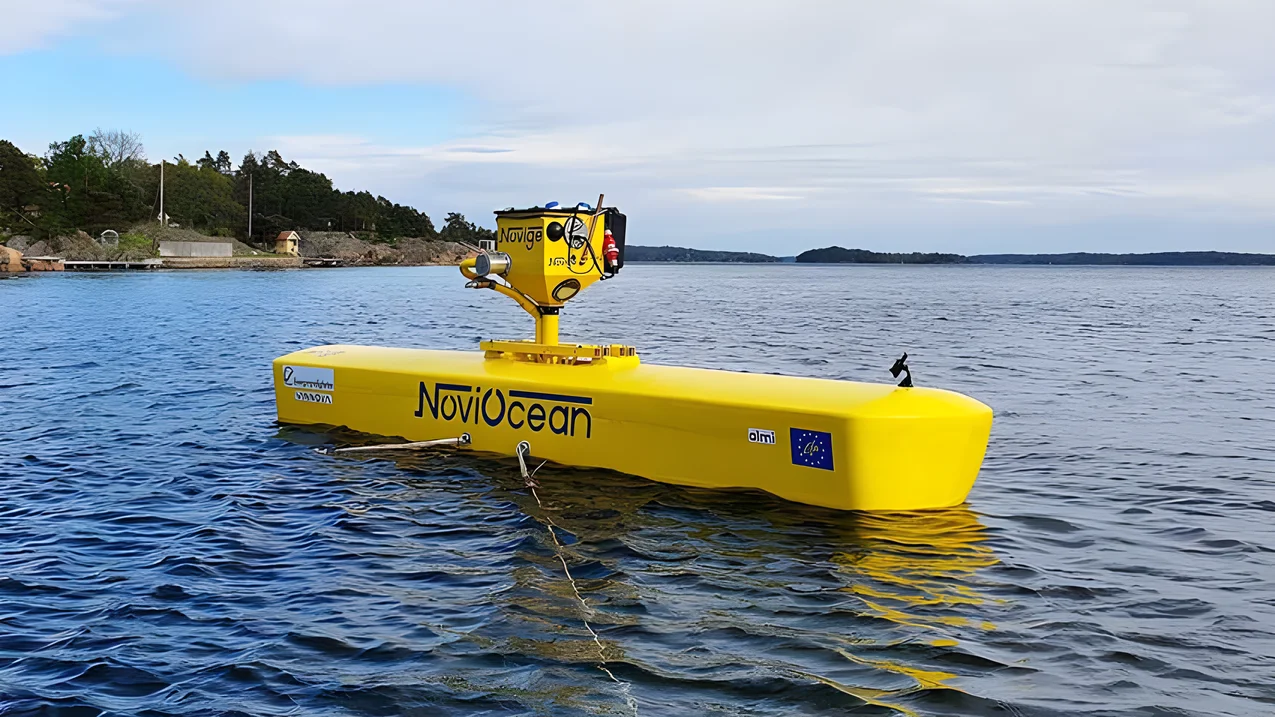
The large float
The part that meets the sea. Buoyancy captures the energy, not a moving blade — which is why the float is a welded hull rather than a machine.
Technology
Wave, wind and solar on a single floating structure, built almost entirely from technologies that already work at sea.
The future of Offshore Energy will NOT be single-source systems, it will be hybrid!
The integration logic
The cost of offshore power sits in the structure, the mooring, the cable, the permit and the vessel time. A hybrid platform pays for those once and runs three sources through them.
Three sources share one hull, one deck and one set of marine operations instead of three separate projects.
A single mooring spread holds the whole system, on sites from shallow water out to the deeper shelf.
One export cable carries the combined output, so the most expensive part of the connection is shared.
Built in ordinary shipyards, towed out and connected. No heavy-lift vessel, no seabed foundation work.
Built on proven technology
NoviOcean is a systems integrator — a new integration of largely proven technologies, not an entirely experimental system. Three of the four main components are already commercial. The maturity of each one is stated below.
Midsummer
Flexible CIGS panels, already produced commercially and laid straight onto the deck.
TRL 9Wind Harvest
Commercial vertical-axis turbines, mounted on the platform rather than on a tower of their own.
TRL 8–9Shipyard construction
A conventional welded steel structure, built with the methods yards use every day.
TRL 8–9NoviOcean
The one genuinely new part. Proven hydraulics, driven from a new direction.
TRL 6 → 7TRL labels on this page are screening self-assessments made by the company and its partners. They are not independent certifications.
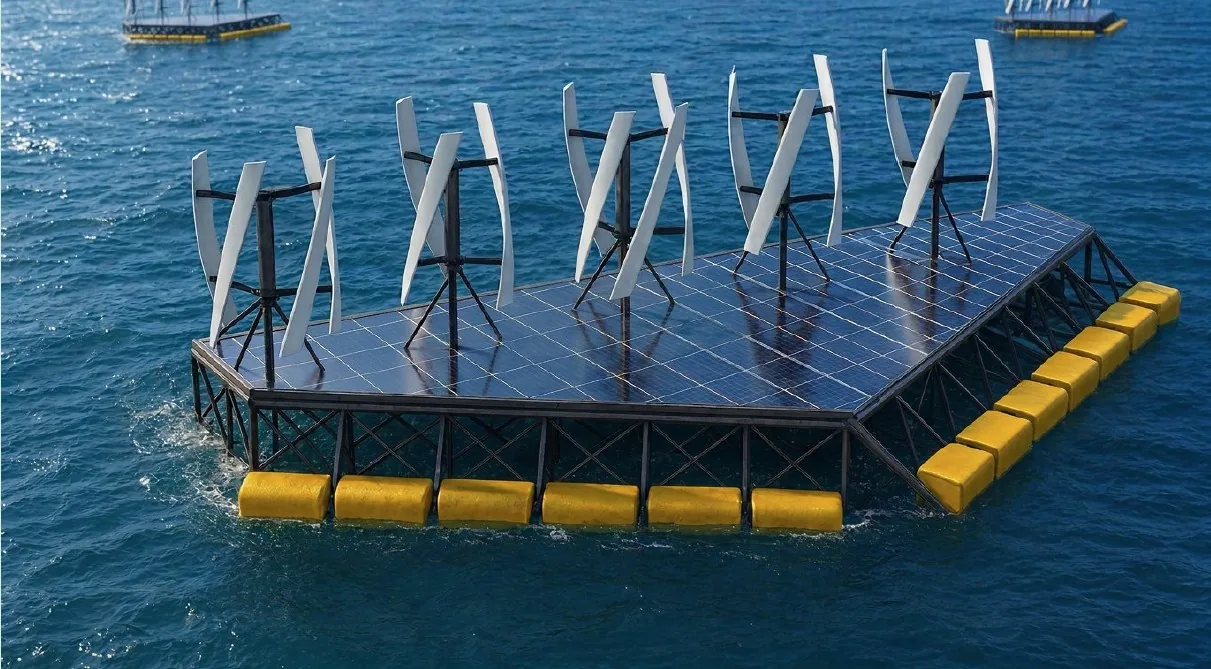
For illustration only — the actual design is shared in closer dialogues.
Wave
Hydropower has run water under pressure through turbines for more than two hundred years. Those hydraulics are among the most reliable machines in energy, and NoviOcean uses them as they are.
The only innovation is where the pressure comes from. Instead of a dam and a head of water, large floats ride the passing waves and lift against the sea. The rest of the chain is equipment the industry has trusted for generations.
How it works
There is no gearbox and no generator under the water. A large float rides the passing wave, buoyancy turns that motion into water at pressure, and the pressure drives a turbine type that hydropower stations have run continuously since the 1880s.
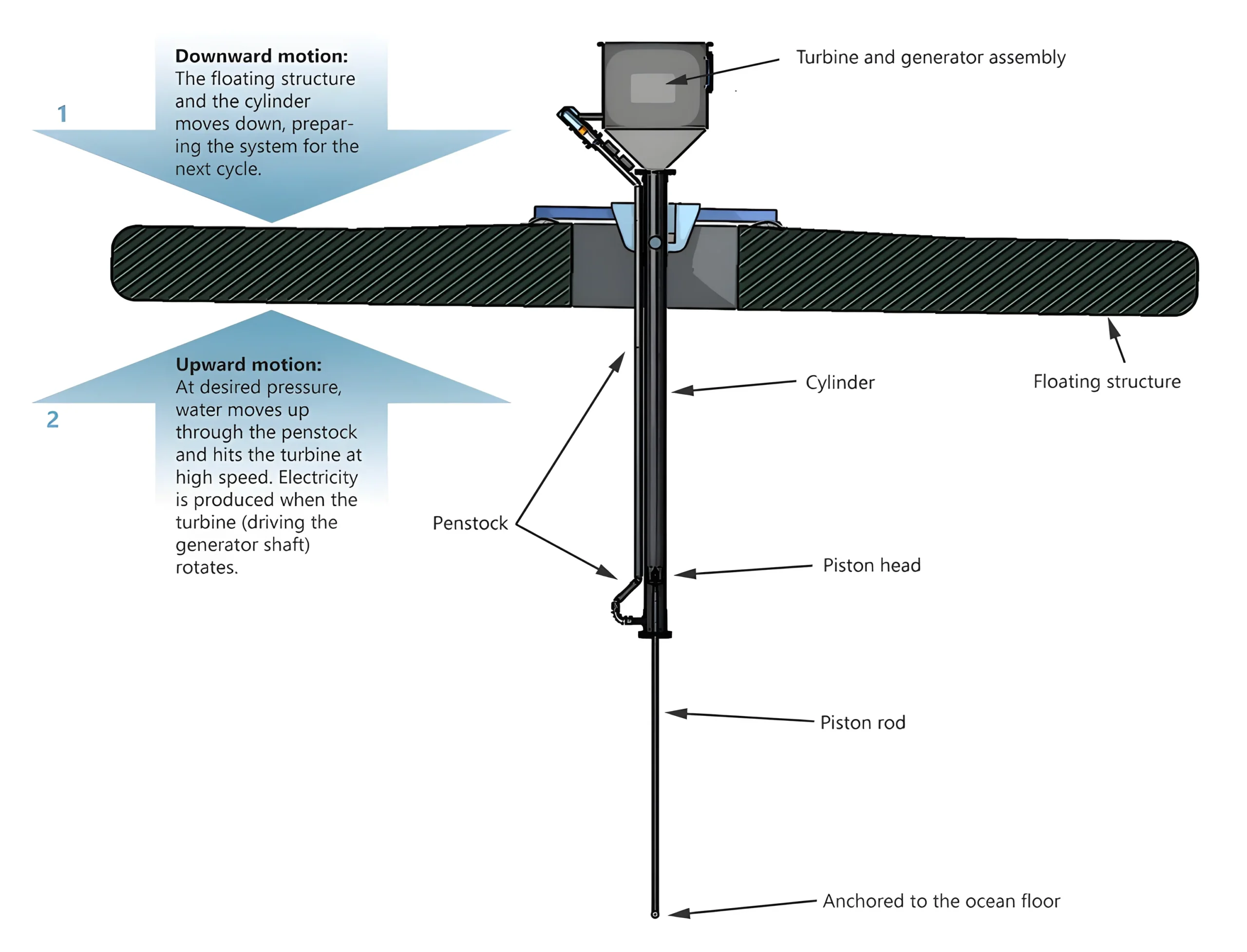
The wave power take-off in section. On the Medi Wave 850H the cylinder pushes upward against the platform rather than down to the seabed, which keeps the whole assembly above water and removes the subsea components.
Its rectangular shape follows the shape of the wave itself, presenting the largest possible surface to the passing swell.
At the bottom of the cycle the valve shuts, holding the float in a fixed position relative to the sea floor.
Up to three metres of the float is locked below the surface as the water climbs past it.
Six hundred cubic metres of it. That displaced volume is what the lifting force is made of.
At the right pressure the valve releases. Six hundred tonnes of lifting force push high-pressure water onto a Pelton turbine, which turns the generator.
The moving parts
A hydropower plant taken to sea and inverted. The slow travel of a wave becomes high generator speed through parts that shipyards, hydraulics suppliers and hydropower stations already build in series.
The part that meets the sea. Buoyancy captures the energy, not a moving blade — which is why the float is a welded hull rather than a machine.

Standard hydraulics, the same component class used across heavy industry, converting the float's slow travel into water at working pressure.
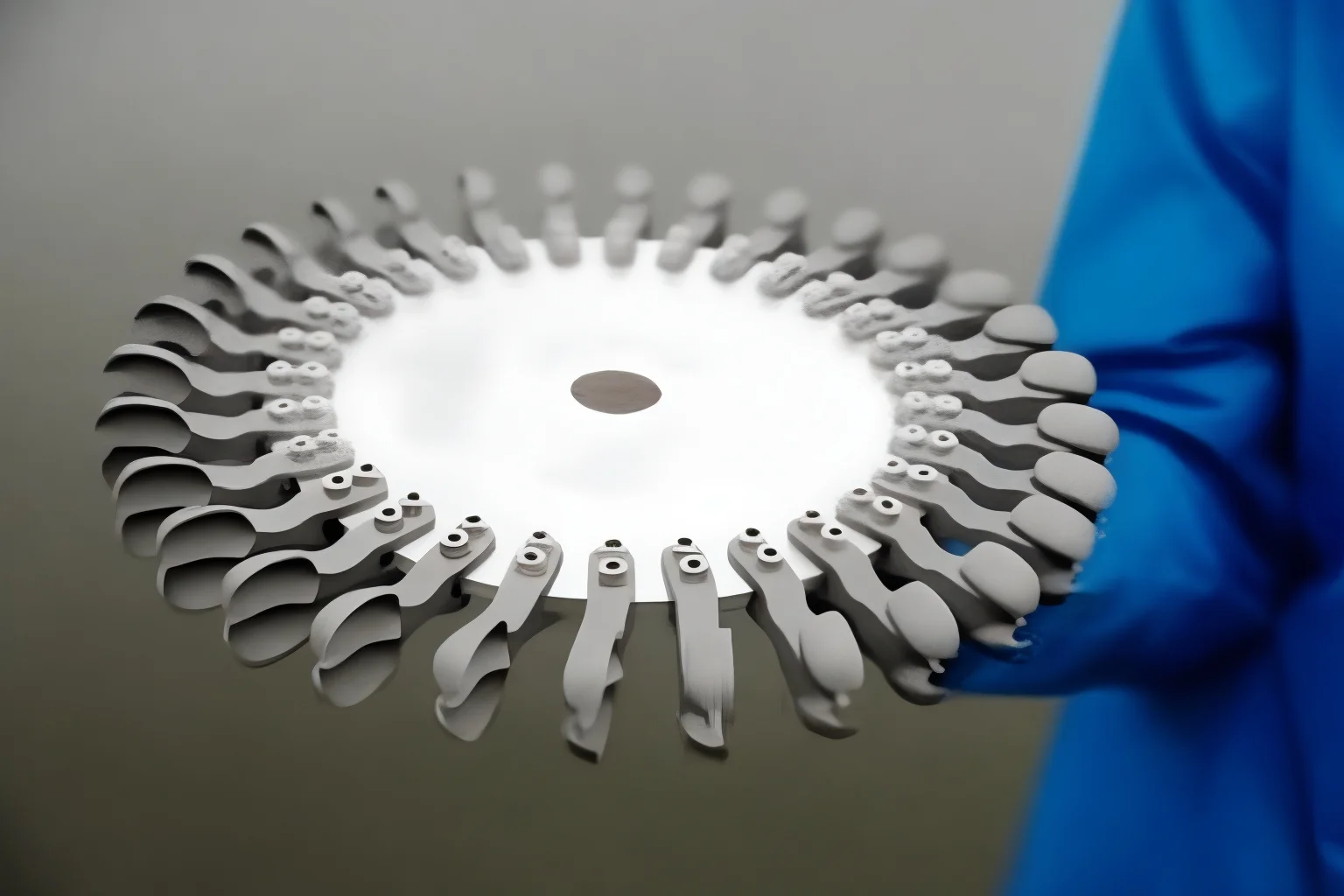
A turbine design in continuous hydropower service for well over a century. Nothing about it had to be invented for the sea.
The float and the hydraulic unit are photographs of NoviOcean test hardware. The Pelton runner shown is representative of the turbine class rather than a NoviOcean part.
Survivability
Wave machines are rarely lost to the force they harvest. They are lost to drag. A low draft and a free-floating design leave the storm very little structure to push sideways, while the lifting force the system works with stays large.
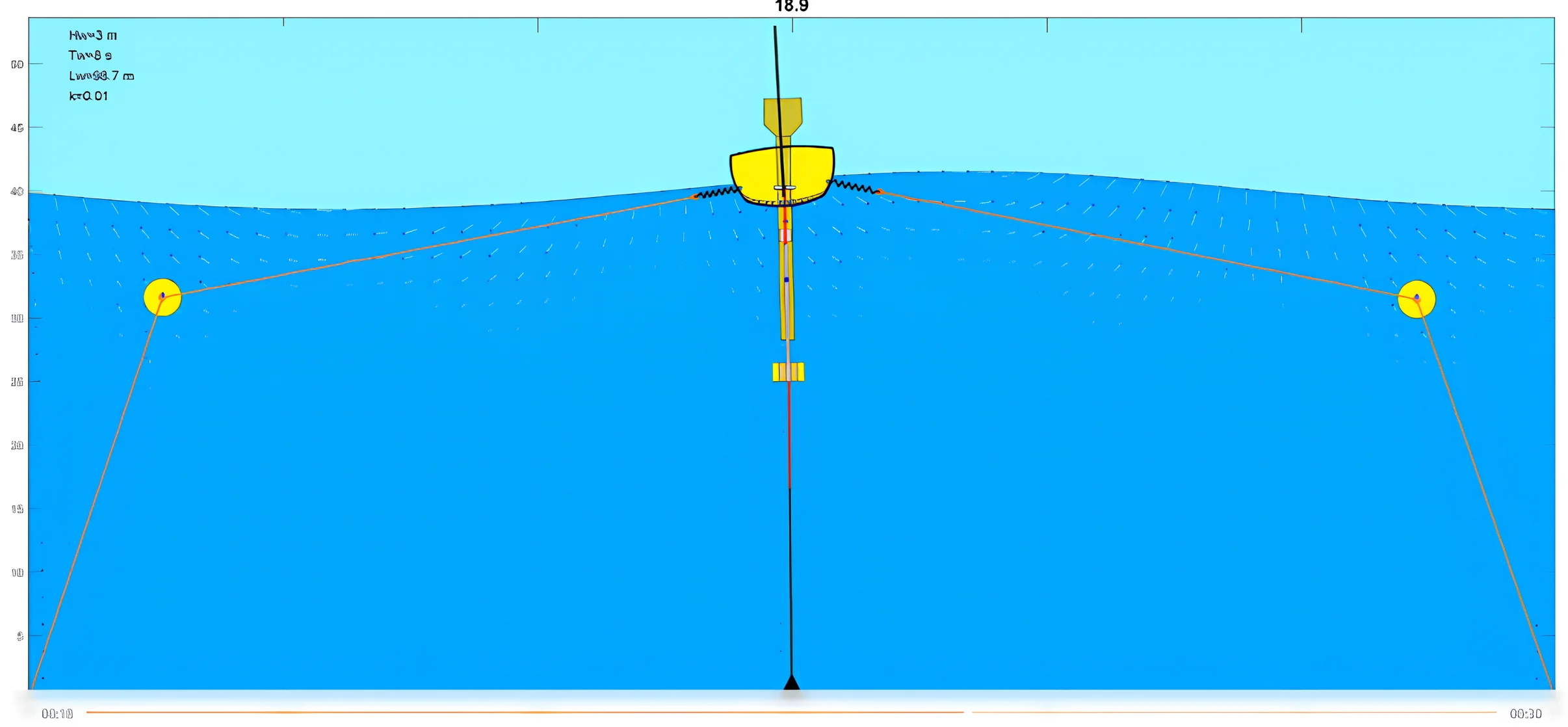
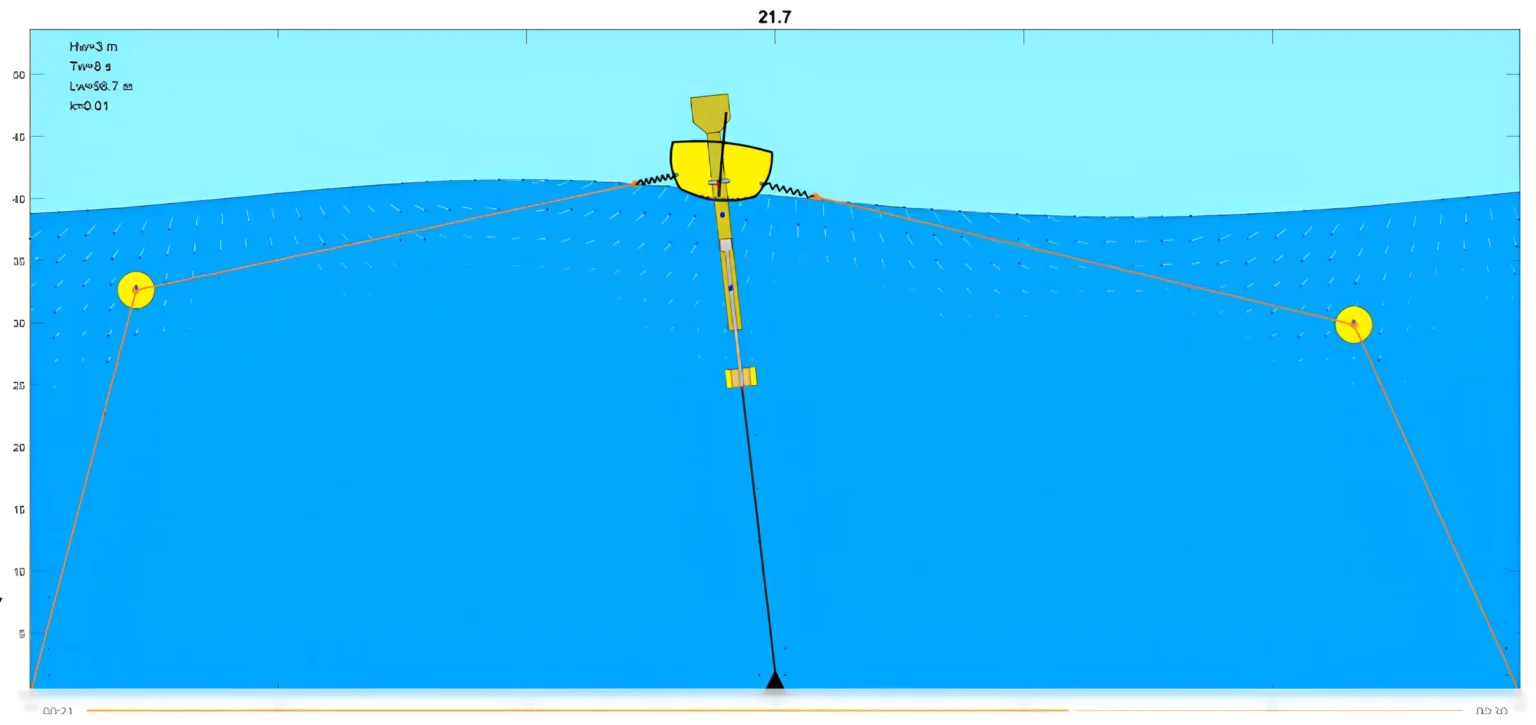
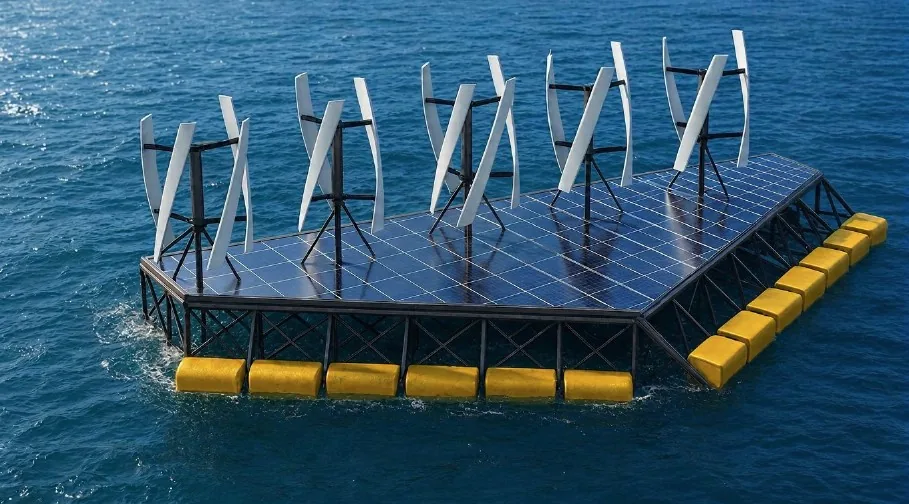
For illustration only — the actual design is shared in closer dialogues.
Wind
The right comparison is not vertical against horizontal turbines. It is which complete floating system produces the lowest cost of energy.
Vertical turbines capture slightly less energy, and create dramatically smaller overturning moments. That means less steel, a lighter platform, a smaller foundation and a simpler installation — savings that run through every part of the system underneath them.
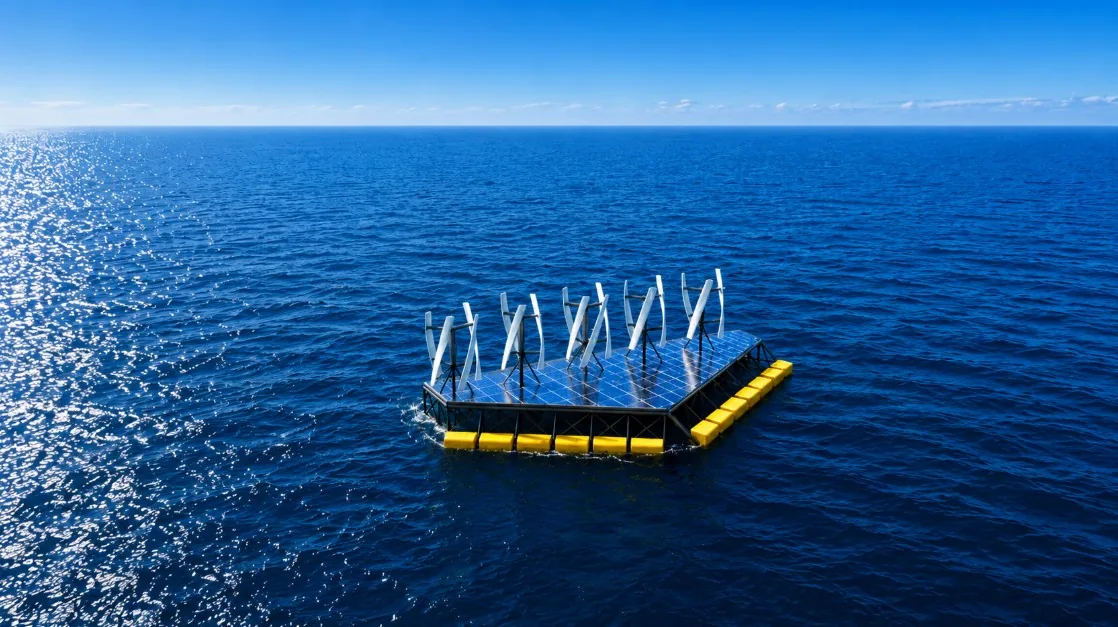
For illustration only — the actual design is shared in closer dialogues.
Solar
Flexible CIGS solar is not always the best roof solution. It is almost ideal for NoviOcean. The panels are light, they take the shape of the deck, and they cover a surface the platform needs anyway.
Midsummer is a genuine partnership rather than a supplier relationship. Each company strengthens the other's commercial case, and the solar keeps the platform producing on the calm bright days when waves are at their smallest.
Availability
90% of sea conditions are conditions the platform operates in.Coverage
Alta Wave 1000H takes the high-energy waters. Medi Wave 850H takes the calmer, more common sea states — which is where most people, most ports and most grids actually are. The overlap is wide enough that many sites can take either unit.
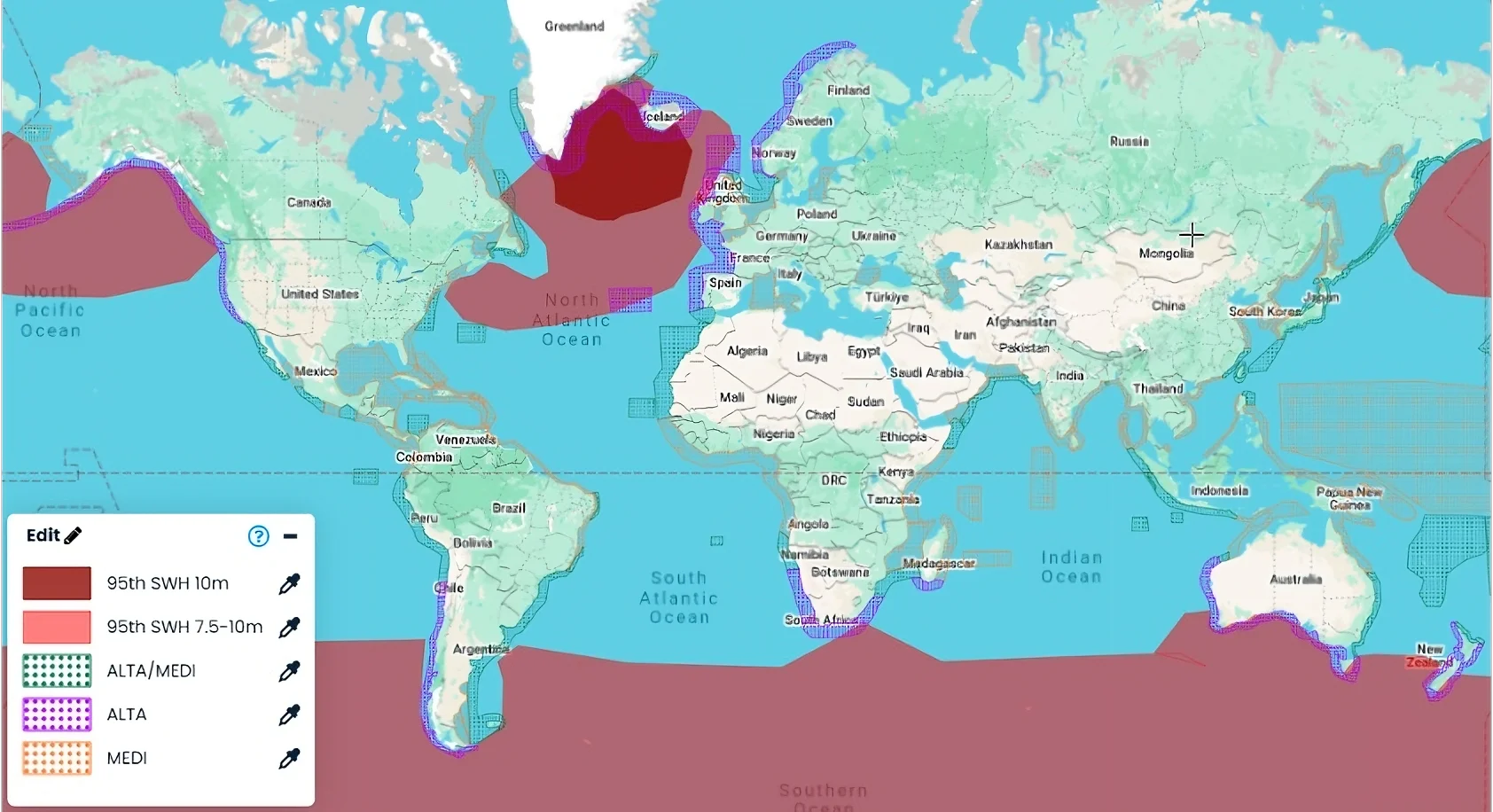
Modelled coverage for the two units against 95th-percentile significant wave height.
Development
Concept and first models.
Scale 1:6 prototype tested at sea.
Scale 1:5 prototype offshore.
Full-scale pilot unit.
Pre-commercial array.
Commercial deployment.
Swipe to see the full programme.
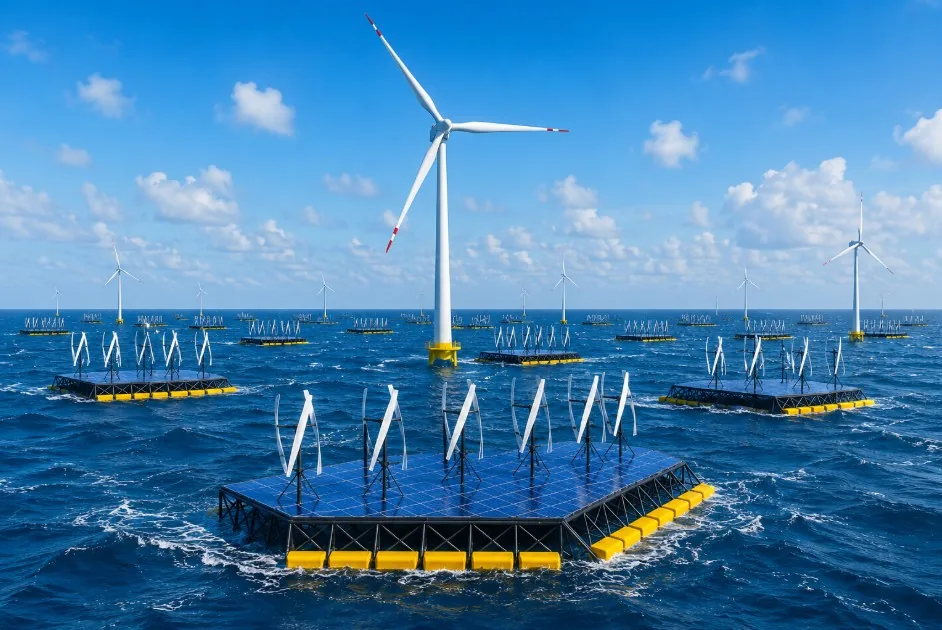
Co-located inside an existing offshore wind farm.
For illustration only — the actual design is shared in closer dialogues.
The models
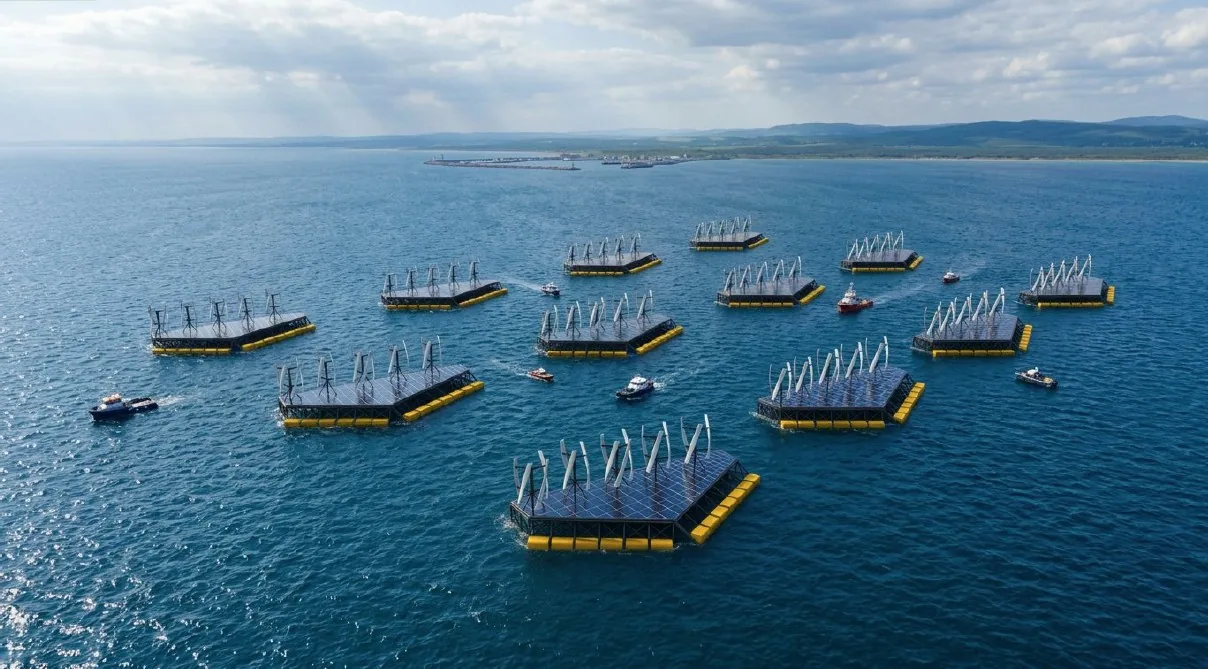
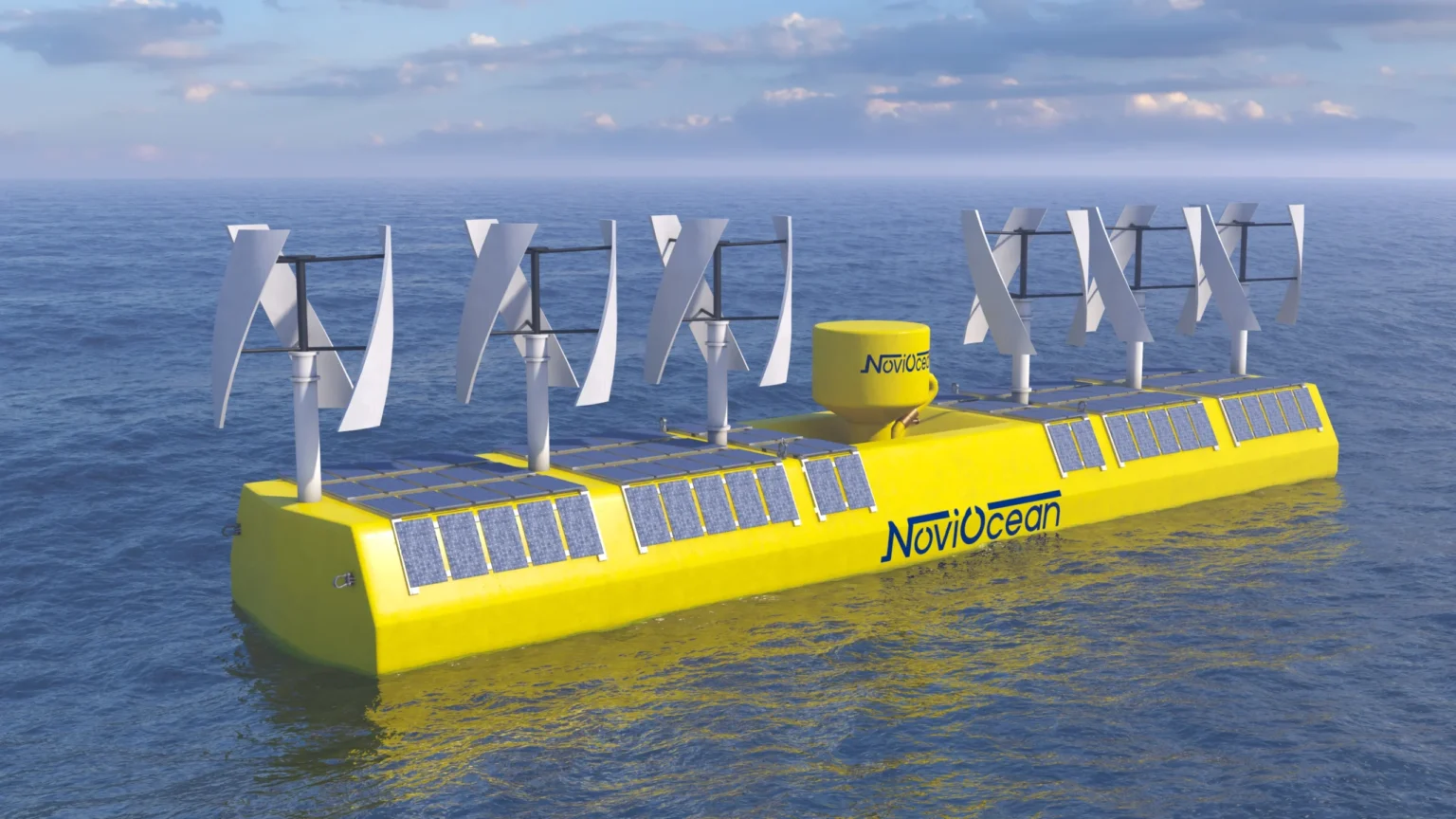
For illustration only — the actual design is shared in closer dialogues.
Modular add-ons
Electricity is the default output, not the only one. The pressure, the deck space and the cable route are already paid for, so a unit can be specified to deliver water, stored power or fuel instead.
Reverse osmosis runs on pressure the float already produces, on board each float. The freshwater line comes ashore alongside the export cable.
Desalination sites →Marine-rated containers on deck, air or liquid cooled. For islands and small grids it turns the platform into a complete balancing package.
Island grids →Electrolysis at sea, for customers whose demand is fuel rather than electrons. Specified for future deployments.
Hydrogen sites →Where currents are strong, the float can instead carry submerged tidal turbines — the same triple hybrid, with tide in place of wave.
Add-on capacities are indicative and depend on site and configuration. Tidal replaces the wave take-off rather than adding to it, and applies to a small share of sites — global tidal potential is roughly a tenth of wave.